Magic Valley NLP
Rupert, ID 83350-1105
droundy
11 - The Seat Belt
In NLP we learn that people use different senses, or representation systems, to view their world. Some people focus on sight, others hear their world and still others feel their world. VAK is an NLP word that stands for visual, auditory, and kinesthetic.
Most people use one of those three systems as their primary system. They don’t even know they do. But there are also people who use olfactory and taste, or gustatory senses as their primary representation system. I love to hear a yoga teacher of mine say, “This feels like a candy bar.” A rare individual, she receives much of her input of the world in the senses of smell and taste.
If we can find out what representational system a student uses we can tailor their education to the representational system the student learns best in. Some teachers are very adept at it. Others, like me, are not so good. Still I know it works so I sometimes use the shot gun approach and hit the kids with all three major systems, visual, auditory and kinesthetic, in order to best reach the entire group.
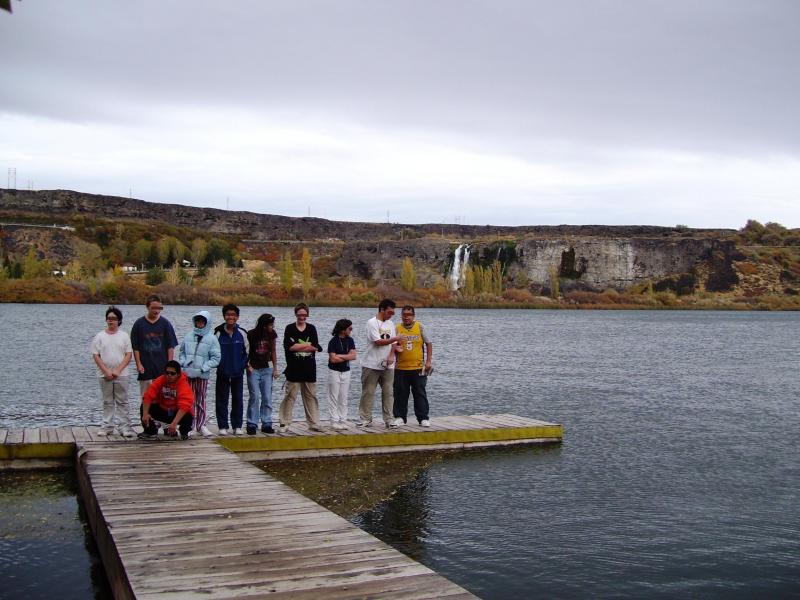
One day we went on a field trip. I have students from three different schools with me so I did not know all of the students well. One we’ll call
Troy is a student with Down syndrome. One of the characteristics of Down syndrome is a tendency to be very stubborn and today was his day. He was not going to wear a seat belt and because he also has no sense of time he was in no hurry to get it on. His peers pleaded. He was adamant. He didn’t want to leave the fun area we were visiting, so he was not putting his seatbelt on because that meant we would leave.I had an idea. I pulled Troy aside. I said “Troy , Can you see Troy with a seat belt around your middle. Imagine seeing that seatbelt around your hips. Can you hear the sound of the seatbelt going click? Hear that sound in your imagination. Hear the click. Feel the seatbelt around your hips, not too tight, but just right. Can you do all of that, Troy .”
Troy nodded. He walked over to his seat and sat down. He pulled out the seat belt and looked at it. He put on the seatbelt listening for the click. He felt it around his hips. He smiled. Off we finally went.
Troy cannot talk much, but by using all three representation systems I was able to use the one that is primary for him and more easily convince him to do what needed to be done. By using all three representation systems often in our classrooms to teach our students we will be more likely to engage all of our students in optimum learning.
©Debrah Roundy 2008
Rupert, ID 83350-1105
droundy